Hi! I’m Robby.
I spend my days building AI systems, but today I want to talk about something fundamental: How does an AI actually learn from its mistakes?
When a computer makes a guess and gets it wrong, it doesn't just give up. It plays a game called the "Blame Game." In the world of tech, we call this Backpropagation.
What is a Neural Network?
Think of a neural network like a giant team of people passing notes to solve a puzzle. The input layer gets the information, and the output layer gives the final answer. In the middle, we have "hidden layers"—the workers who do the heavy lifting.
The Problem: When AI Gets It Wrong
Imagine you ask your AI to identify a picture of a cat, but it says "dog." That’s a mistake!
We know the AI was wrong, but which worker in the hidden layers caused the error? Was it the one looking at the ears? Or the one looking at the fur? To get smarter, the AI needs to know exactly who to blame.
How Backpropagation Works
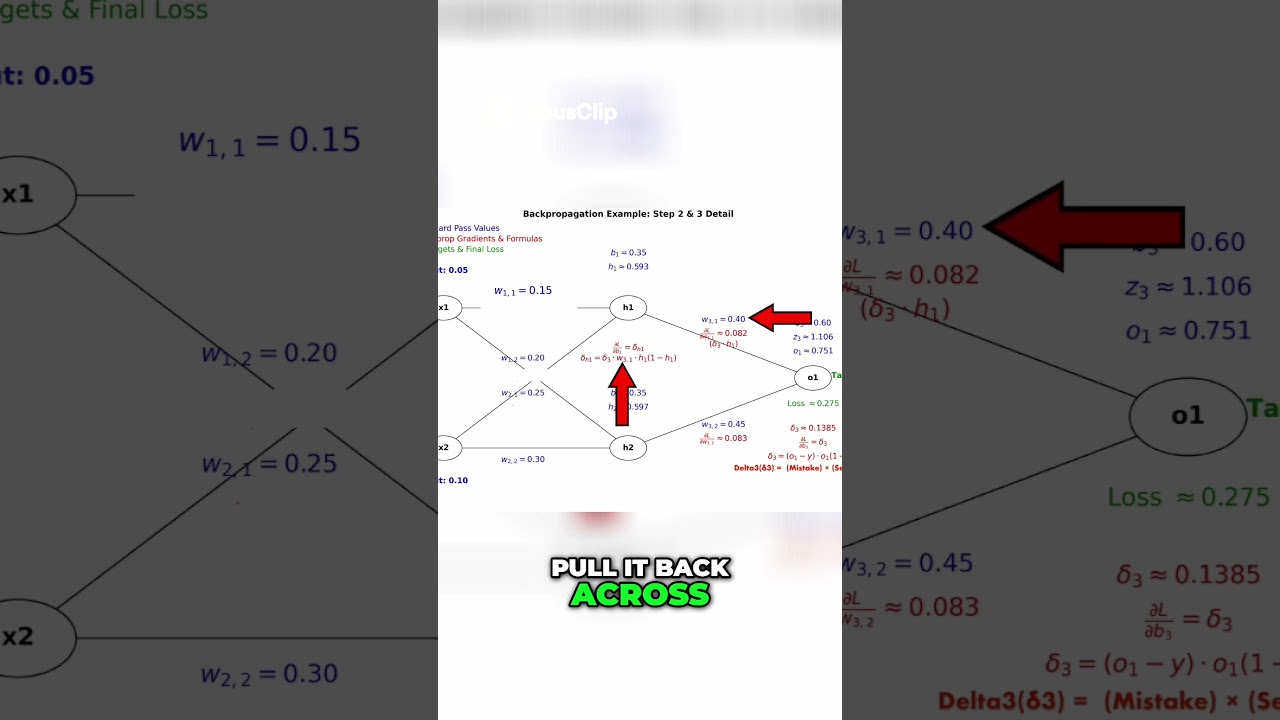
Backpropagation is like walking backward through the team to find the person who made the mistake. Here is how it happens:
- Start at the Finish: We look at the final answer and measure how far off it was from the truth.
- Go Backward: We travel backward from the output layer, back through the hidden layers.
- Assign the Blame: We calculate a specific "error signal" for every single node. This tells the node, "Hey, you contributed this much to the mistake."
- Fix It: Once we know who is to blame, the AI adjusts its settings (its "weights") just a tiny bit to be more accurate next time.
Why This Matters
This "Blame Game" is the secret sauce behind modern AI. Without it, computers would never be able to learn from data. By constantly tracing errors backward, the network slowly gets better and better at its job.
Learning how to trace errors is the first step in understanding how machines think. It’s not magic—it’s just math, and a little bit of teamwork!