Ever Wonder How AI Actually Thinks?
Hi! I’m Robby. As a software engineer, I spend a lot of time building complex AI systems. But the best way to really understand how AI works isn't by using big, fancy libraries—it’s by building one from scratch.
Today, we are going to build a neural network using only Java. No shortcuts, no pre-built tools. Just plain, pure code.
Why Build It From Scratch?
When you use a library, it feels like magic. But magic is hard to debug! By writing the math yourself, you learn exactly how a computer "learns." We are going to solve the XOR problem. It’s a classic challenge in AI that simple models can't solve, making it perfect for a 3-layer neural network.
How Our Neural Network Works
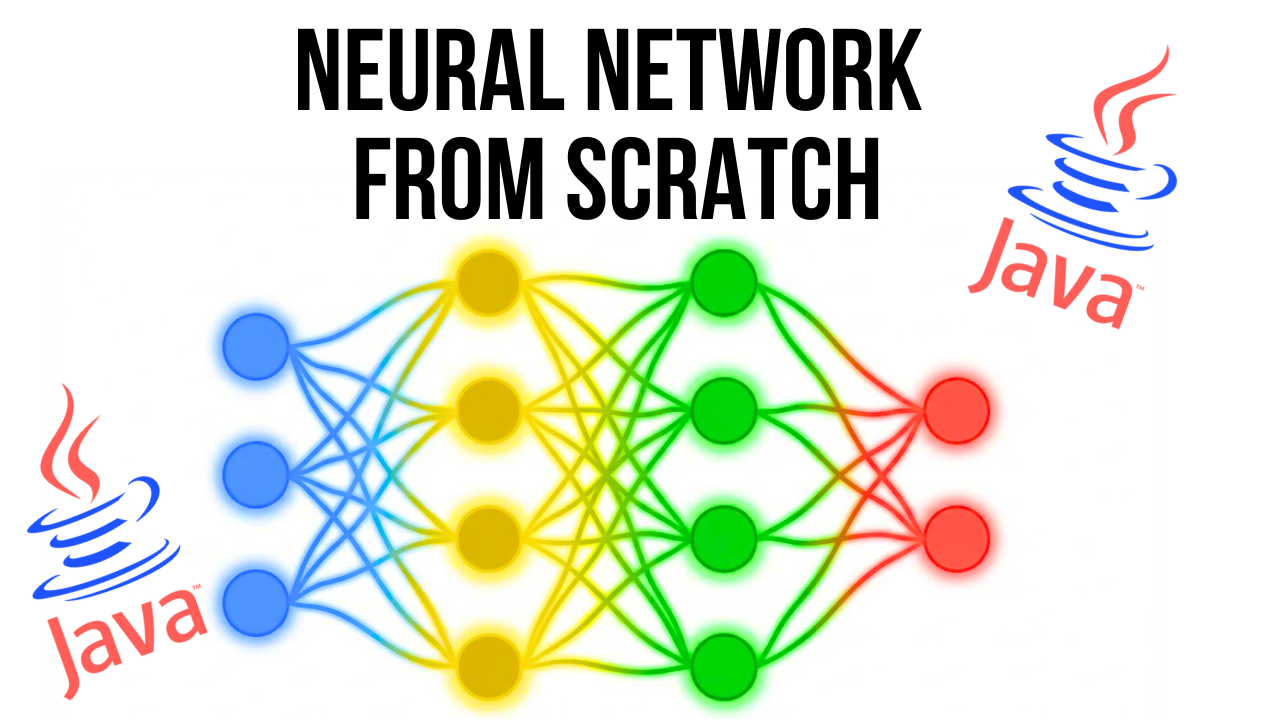
Our network is like a tiny brain with three main layers:
- Input Layer: Where the data enters.
- Hidden Layer: The middle part where the "thinking" happens.
- Output Layer: Where the final answer pops out.
The Important Parts:
- Weights and Biases: These are the numbers the model changes to get better at guessing.
- Sigmoid Activation: A special math function that helps the network understand complex patterns.
- Forward Pass: The data moves through the network to make a guess.
- Backpropagation: The network checks its mistake and goes backward to adjust its internal numbers.
- Gradient Descent: The process of taking small steps to get closer to the right answer every time.
Let's Write the Code
We will train our network for 10,000 "epochs" (that’s just a fancy word for rounds of practice). By the end, you’ll see the model go from making random guesses to getting the math right every single time.
Working without frameworks forces you to understand the logic. It’s great practice for job interviews and will make you a much stronger developer.
Get Your Hands Dirty
I’ve put all the code on GitHub so you can follow along. Don't worry if it looks like a lot at first—take it one method at a time. Once you see the output correctly predicting the XOR values, you’ll have a "lightbulb moment" that you won’t get anywhere else.
Ready to start coding? Grab the files, open your favorite Java editor, and let’s teach a computer how to learn!