Hi, I’m Robby!
As a software engineer who builds AI systems for a living, I spend a lot of time looking at how neural networks "think." One of the most common issues I see is something called the Dead ReLU problem.
If your model isn't learning, this might be why. Let’s break it down in plain English.
What is ReLU?
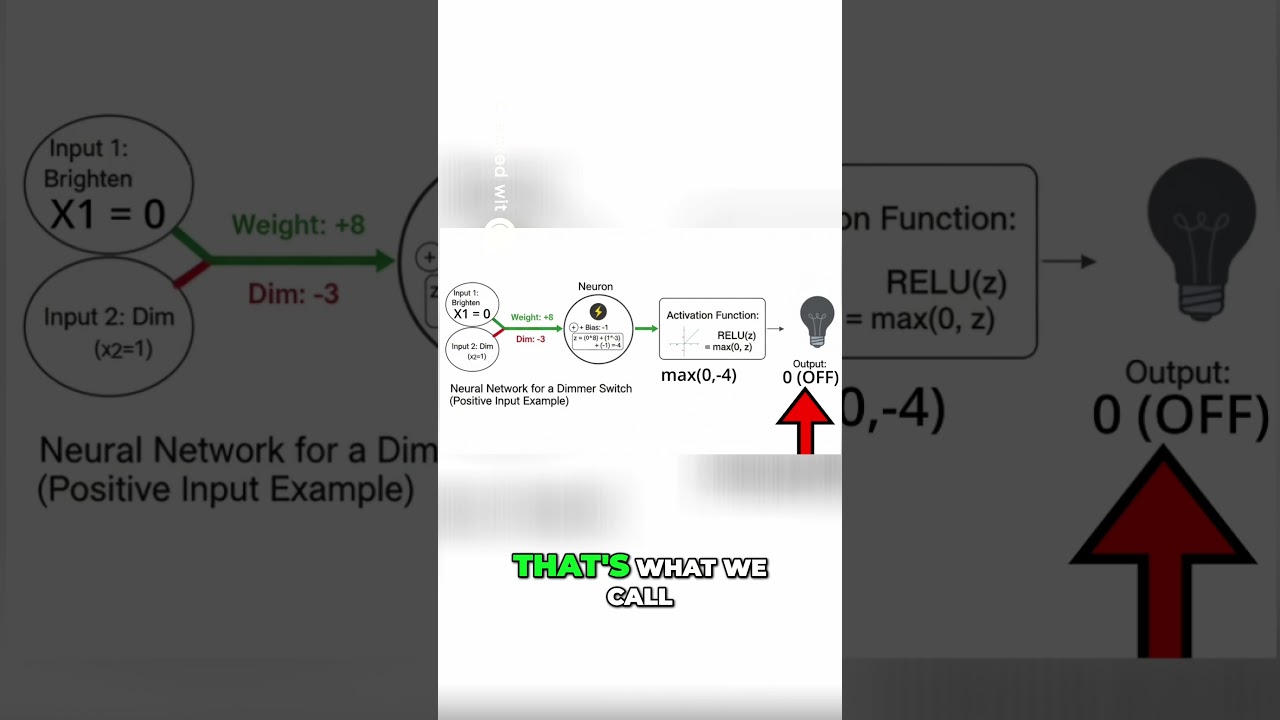
Think of a neuron in an AI like a light switch. ReLU (Rectified Linear Unit) is a popular tool we use to tell that neuron when to turn on.
If the input is a positive number, the neuron fires. If the input is zero or a negative number, the neuron stays off. It’s simple, fast, and usually works great.
The Problem: When Neurons "Die"
Here is the flaw: if a neuron gets stuck and only sees negative numbers for a long time, it becomes completely flat. It basically goes to sleep and never wakes up again. In my field, we call this a "Dead ReLU."
When a neuron is "dead," it stops learning. It just sits there doing nothing, which makes your whole AI model much less smart.
How We Fix It
Instead of letting the neuron go totally flat at zero, we can add a tiny "leak." This keeps the neuron just active enough so it can eventually jump back into the game if things change.
Here are the three popular ways we fix this:
- Leaky ReLU: Instead of a flat line at zero for negative numbers, we use a tiny slope. It’s like a small crack in the door so the neuron can still "breathe."
- Parametric ReLU (PReLU): This is a fancy version where the AI itself learns exactly how much of a "leak" it needs to stay alive.
- ELU (Exponential Linear Unit): This one uses a smooth curve for negative numbers instead of a straight line. It helps the AI learn faster and stay more stable.
The Takeaway
If your neural network is having trouble learning, check your activation functions! Sometimes, all you need is a little "leak" to bring those dead neurons back to life.
Happy coding!