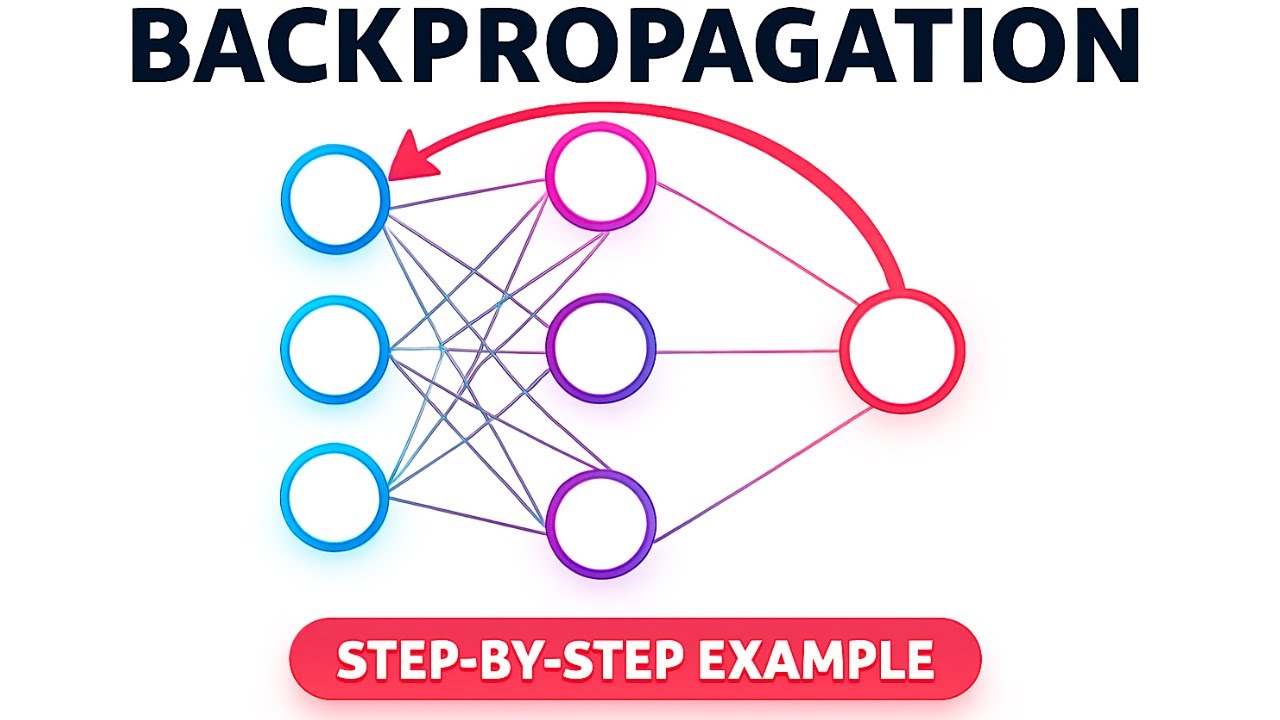
How Do Computers Learn?
Hi, I’m Robby! I spend my days building AI systems, and a lot of people ask me, "How does a computer actually 'learn'?"
Think of a neural network like a student taking a test. At first, the student guesses the answers. They get some right, but they get a lot wrong. To get better, they need to know why they got it wrong so they can fix it for next time.
In the world of AI, this process of fixing mistakes is called Backpropagation.
The Three Steps of Learning
To understand how a neural network learns, imagine a simple three-step cycle:
- The Forward Pass: The network makes a guess. It looks at the data and spits out an answer.
- The Loss Function: We measure the mistake. We compare the network’s answer to the real, correct answer to see how far off it was.
- Backpropagation: This is the magic part. We go backward through the network to see which parts made the mistake and adjust them.
Making a Mistake and Fixing It
Inside a neural network, there are little knobs called weights. These weights decide how much importance the network gives to different pieces of information.
When the network makes a mistake, we use something called the Chain Rule (a simple bit of math) to figure out which weights are to blame. Think of it like a chain of people passing a ball; if the ball gets dropped, we track backward to see who missed the catch.
Once we know which weights caused the error, we nudge them in the right direction. We call this Gradient Descent. It’s like slowly turning a dial until the error goes down.
A Simple Analogy
Imagine you are learning to throw a paper airplane.
- You throw it (Forward Pass).
- It hits the wall instead of the target (Loss Function).
- You think: "I threw it too hard and my wrist was angled too high" (Backpropagation).
- Next time, you throw with less power and adjust your wrist (Gradient Descent).
You keep repeating this until you hit the target every time. That is exactly what your computer is doing!
Why This Matters
Learning the math behind backpropagation is like learning how an engine works. You don’t need to be a race car driver to understand that giving more gas makes you go faster. By seeing how weights change based on errors, you now understand the "engine" of modern AI.
We didn't skip any steps or hand-wave the math. By measuring the mistake, tracing the blame backward, and adjusting the weights, your network gets smarter with every single example it sees.
Keep practicing, keep building, and stay curious!