Hi there! I’m Robby.
As a software engineer who builds AI systems every day, I get asked a lot of big questions. One of the most common ones is: How does a computer actually 'think'?
Computers don't have brains like us, but they are great at following rules. One of the best ways they do this is with something called a Decision Tree.
Think of It Like a Game of 20 Questions
Have you ever played a game where you have to guess an animal by asking 'yes' or 'no' questions? A decision tree is exactly like that!
Imagine you are trying to decide what to wear today. Your brain might go through a little flow chart:
- Is it raining?
- Yes? Wear a raincoat.
- No? Is it cold?
- Yes? Wear a sweater.
- No? Wear a t-shirt.
That simple flow chart is all a decision tree is. It takes a bunch of data and asks smart questions to narrow down the right answer.
How Computers Build These Trees
When we train an AI, we give it a big pile of data. The computer looks at that data and builds its own 'tree' by finding the best questions to ask first.
- The Root Node: This is the starting point. It’s the very first question the computer asks.
- The Branches: Depending on the answer (yes or no), the computer moves down a branch.
- The Leaf: This is the end of the line. It’s the final decision or prediction the computer makes.
Why Do Engineers Love Them?
In my job, I work with some very complicated AI models called 'neural networks.' Those models are super powerful, but they are also like 'black boxes'—it’s very hard to see why they made a certain choice.
Decision trees are different because they are easy to read.
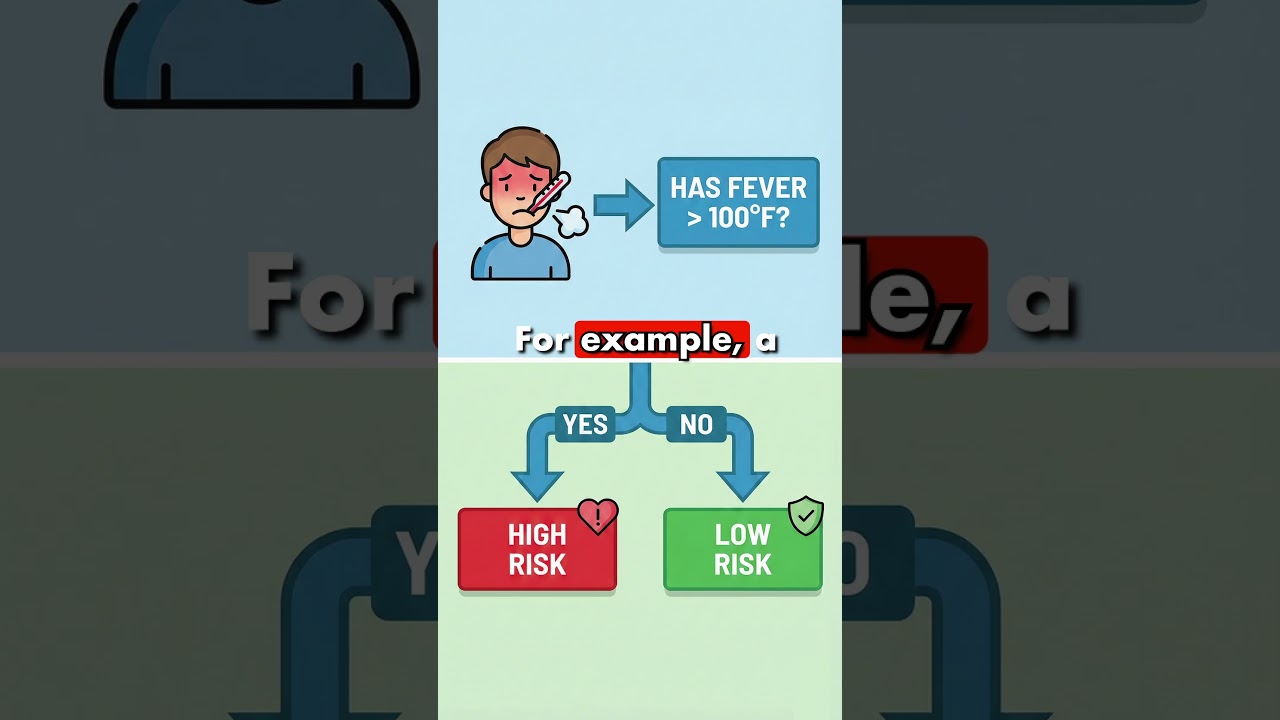
If a computer uses a decision tree to help a doctor figure out what is wrong with a patient, the doctor can look at the tree and see exactly which symptoms led to that diagnosis. Being able to see the 'why' behind an AI’s decision is a huge deal in the tech world!
The Bottom Line
Decision trees show us that AI doesn't always have to be confusing or magical. Sometimes, the best way to solve a problem is just to break it down into small, simple questions.
Keep asking questions, and keep coding!