Hi, I'm Robby!
As a software engineer, I spend a lot of time building AI systems. People often ask me, "How does a computer actually know how to translate a sentence from one language to another?"
It’s not magic—it’s math! And the secret sauce is something called the Encoder-Decoder Attention layer.
The Student and the Notebook
To understand this, imagine you are a student taking a test. You are writing an essay in French, but your textbook is written in English.
To get the answer right, you have to keep flipping back to your English notes to make sure your French essay makes sense. You don't read every single word in your notes at once; you look for the specific parts that help you finish your current sentence.
In the world of AI, the Encoder acts like your notebook of English notes. The Decoder is the student writing the final French translation.
What is the Encoder-Decoder Attention Layer?
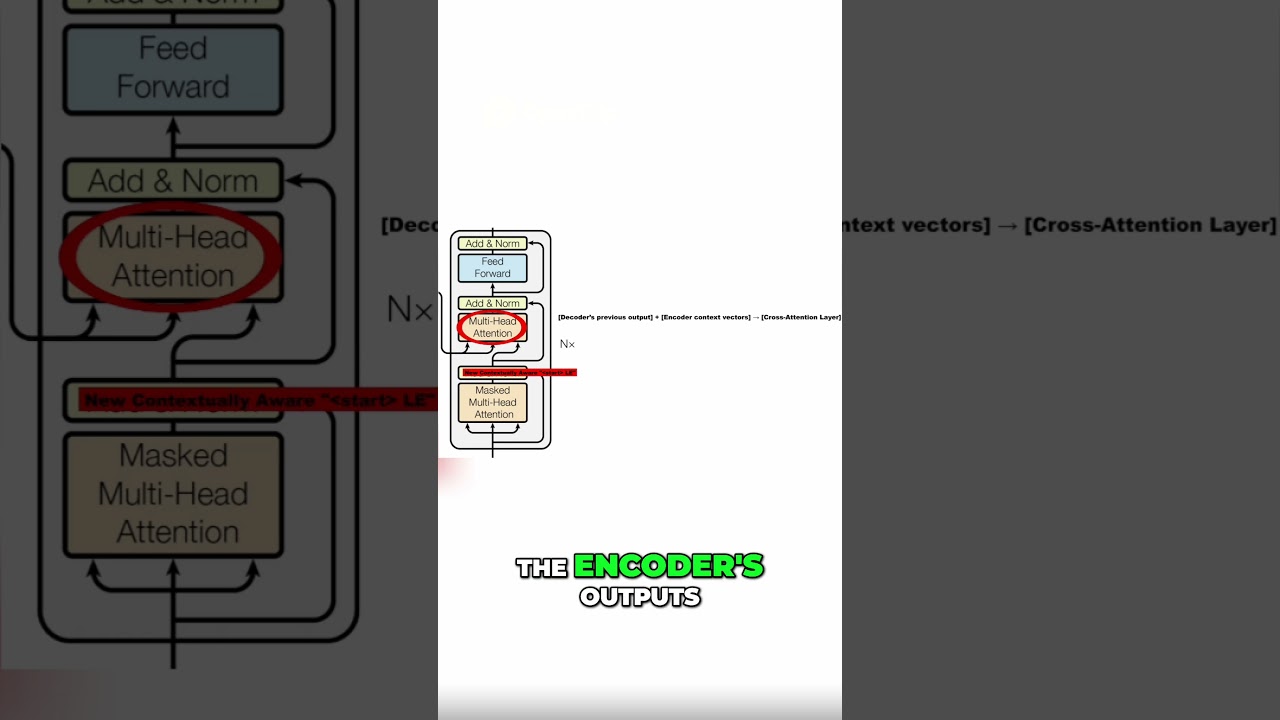
This layer is the bridge between the two. Its job is to help the computer "pay attention" to the right information.
Here is how it works step-by-step:
- Scanning: As the model writes the next word in the new language, it scans the original input.
- Focusing: It figures out which parts of the original sentence are the most important right now.
- Connecting: It links those important bits together to make sure the translation is accurate.
Why Does This Matter?
Without this "attention" trick, the AI would get confused. It might forget what it was talking about halfway through a sentence. By using this layer, the model can stay focused, just like you would if you were carefully checking your notes during a test.
It’s this simple, smart connection that makes modern translation tools work so well. The next time you use a translator app, remember—there’s a little digital student in there, flipping through its notes to help you out!