Hi, I'm Robby!
As a software engineer, I spend a lot of time building AI systems. One of the most common questions I get is: How does a computer actually 'read' a sentence?
Computers don’t know what words like "cat" or "pizza" are. They only understand math. To make AI work, we have to turn human language into numbers. Here is how we do it using two cool tricks called Embeddings and Positional Encoding.
Step 1: Turning Words into Meaning (Embeddings)
Imagine you have a giant map of every word in the dictionary. Words that mean similar things are placed close together on this map.
- "Dog" and "Puppy" would be very close to each other.
- "Dog" and "Spaceship" would be very far apart.
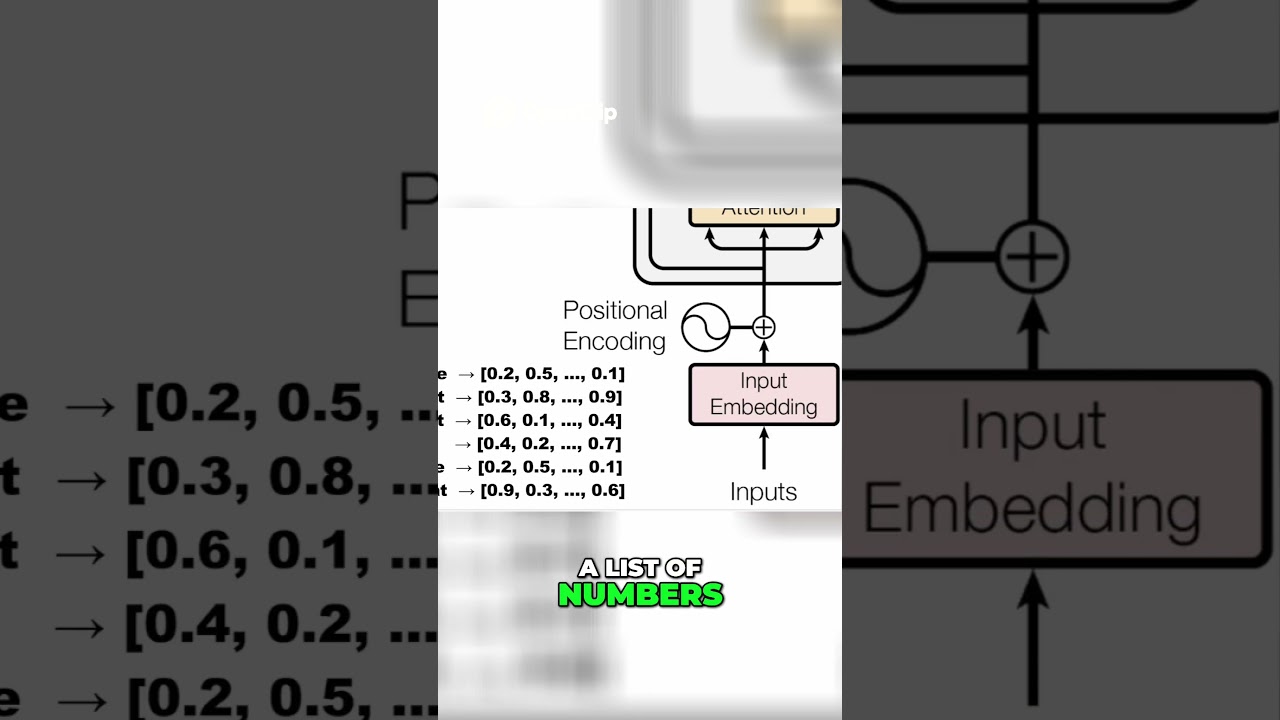
This "map" is called an embedding. It’s basically a list of numbers that tells the computer the meaning of a word. By using these numbers, the AI knows how words relate to one another.
Step 2: Keeping Things in Order (Positional Encoding)
Knowing the meaning of a word isn’t enough. If I say, "The dog bit the man" versus "The man bit the dog," the words are the same, but the meaning is totally different!
This is where positional encoding comes in. Since the AI looks at all the words in a sentence at the exact same time, it needs a way to track the order. We add a special "tag" to each word that tells the AI where it sits in the sentence (first, second, third, etc.).
Putting It All Together
When we combine the meaning (Embeddings) with the order (Positional Encoding), the AI gets the full picture. It knows:
- What the words mean.
- How they fit together in a sentence.
Once the computer has this info, it can finally start to "think" and answer your questions. It’s a pretty amazing bit of math that makes modern AI possible!