Hi! I’m Robby.
I spend my days building AI systems, and one of the coolest parts of my job is figuring out how computers "think." People often ask me, "If computers read all the words in a sentence at the exact same time, how do they know which word comes first?"
That is a great question! To answer it, we have to talk about something called Positional Encoding.
The Problem: Reading All at Once
Older AI models used to read a sentence one word at a time, like you reading a book from left to right. But modern models, called Transformers, are different. They look at the whole sentence at once to save time.
Because they look at everything at once, they can get a little confused. To a computer, "The dog bit the man" and "The man bit the dog" look exactly the same if you don't track the order!
The Secret Sauce: Positional Encoding
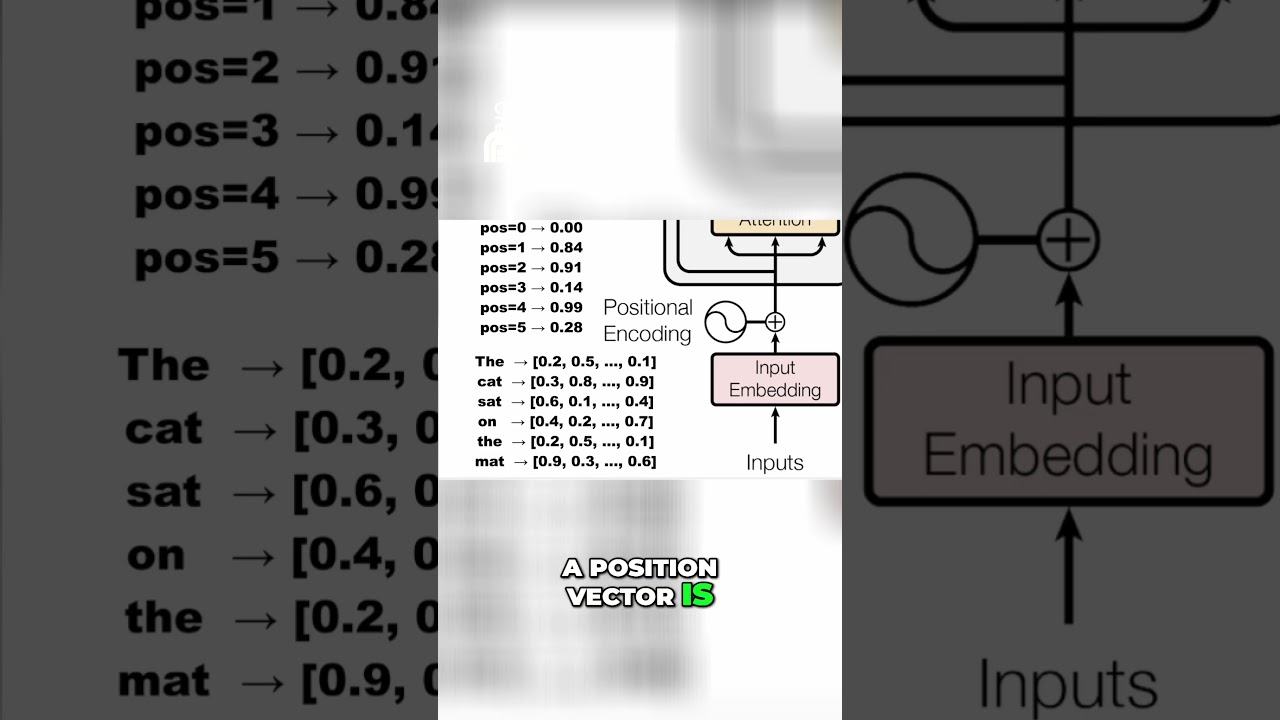
To fix this, we use a trick called Positional Encoding. Here is how it works in plain English:
- Word Meaning: First, the computer turns every word into a list of numbers, called an embedding, that represents what the word means.
- Adding Order: Next, we give every word a "tag" or a unique code that tells the computer its spot in the sentence.
- The Mix: We add this position code to the word's meaning code.
Now, the computer has one combined piece of information. It knows what the word is, and it knows where it belongs in the sentence.
Why Does This Matter?
Think of it like a set of building blocks. If you have blocks that spell "CAT" but they are in a pile, you don't know the order. Positional encoding is like numbering the blocks so you can always build the right word.
Without this simple math trick, AI would be much worse at writing stories, translating languages, or even chatting with you right now!
Next time you use an AI tool, remember: it’s not just reading your words; it’s using tiny bits of math to keep them in the right order.