Hi! I’m Robby.
I spend my days building real-world AI systems, and I have a Master's degree in Computer Science. Today, I want to talk about something that sounds complicated but is actually quite simple: ReLU.
In the world of AI, ReLU stands for "Rectified Linear Unit." It sounds like a big science word, but think of it like a light switch for a computer.
How AI Makes Choices
AI models are basically big math machines. They take in data, crunch some numbers, and try to make a choice. To help them decide, we use something called an "activation function."
Think of the activation function as a gatekeeper. It decides if a signal is important enough to pass along to the next part of the AI’s brain.
The Light Switch Example
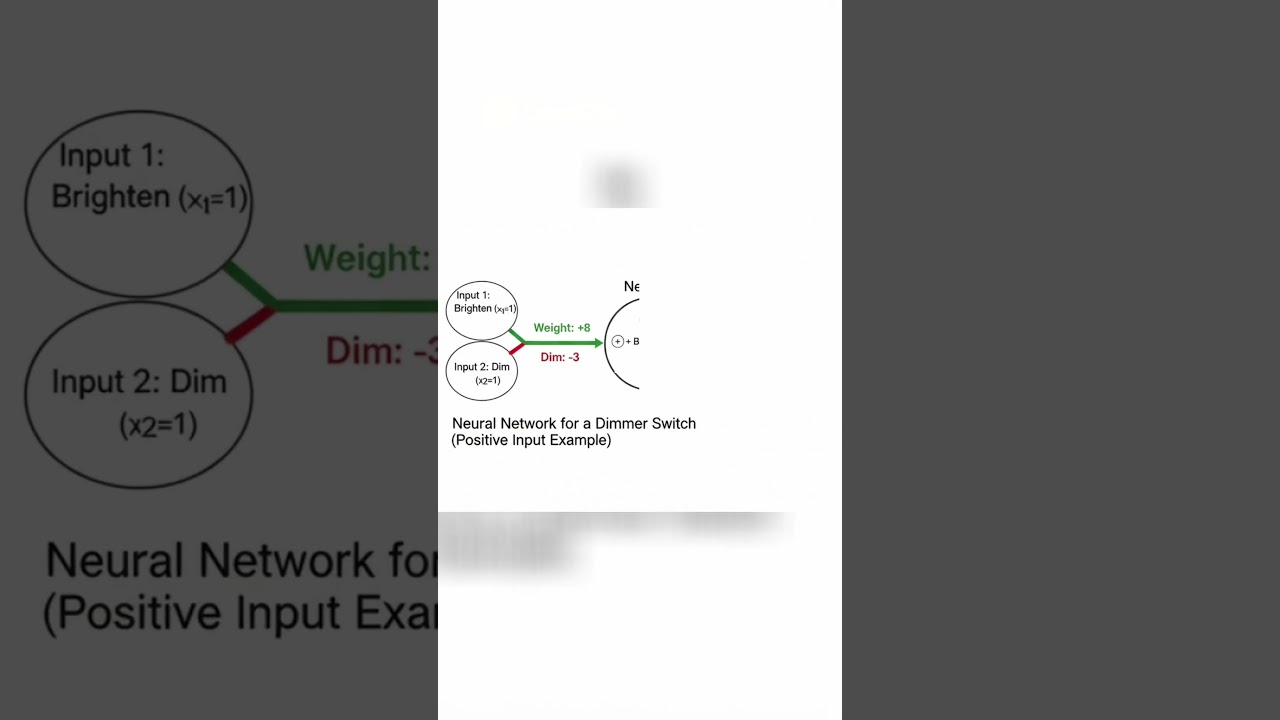
Imagine you have a smart light in your room. You have two buttons: Brighten and Dim.
- The Weights: Each button has a "weight." If the Brighten button has a high weight, pressing it makes the light jump to a higher number.
- The Bias: You also have a starting point (we call this a bias). This is like the baseline brightness of the room before you touch the buttons.
- The ReLU Rule: Here is the magic part! ReLU is a simple rule:
- If the number is negative (less than zero), the output is zero. The light stays off.
- If the number is positive (zero or higher), the output is exactly that number. The light turns on.
Why Do We Use It?
If the math adds up to a positive number, the ReLU "turns on" the light and lets the signal through at full brightness. If the math adds up to a negative number, ReLU blocks it completely.
By keeping things simple, ReLU helps AI models learn much faster. It stops the AI from getting confused by negative numbers and helps it focus on what really matters to solve a problem.
The Takeaway
Next time you hear someone talking about "Activation Functions" or "ReLU," just remember the light switch. It’s just a way for an AI to decide: "Is this information important enough to keep, or should I turn it off?"
Keep building, and keep learning!