Hi everyone! I’m Robby. I spend my days building AI systems, and today I want to pull back the curtain on the technology behind tools like ChatGPT. It is called the Transformer.
At its heart, the Transformer is a smart engine that helps computers understand language. To show you how it works, let’s look at how it translates the English sentence "The cat sat on the mat" into French.
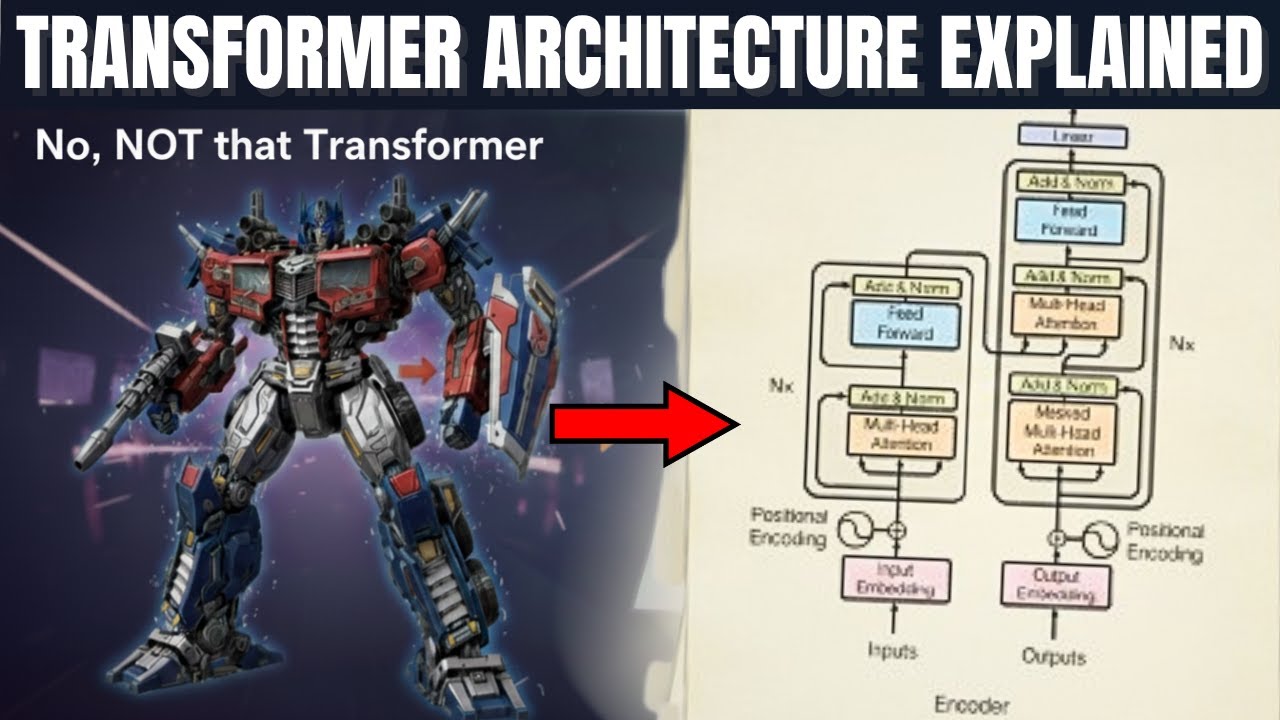
Step 1: Input Processing (Giving Words a Map)
Computers don't understand words like we do; they understand numbers.
- Input Embedding: First, the computer turns every word into a long list of numbers called a vector. This helps the computer group similar words together.
- Positional Encoding: Since the order of words matters (like "The cat sat" vs "Sat the cat"), the model adds a special "position tag" to each word. This tells the AI exactly where each word sits in the sentence.
Step 2: The Encoder (The Context Builder)
Think of the encoder as a brain that reads the whole sentence at once. It uses something called Self-Attention.
This is the secret sauce! It allows every word to "look at" every other word in the sentence. It learns that "cat" and "sat" are related. By the time it’s done, the computer has a super-rich understanding of what the sentence actually means.
Step 3: The Decoder (The Translator)
Now that the computer understands the English sentence, the decoder starts writing the French version. It works one word at a time:
- Masked Self-Attention: It looks at what it has already written to make sure the next word makes sense.
- Cross-Attention: It looks back at the English sentence (the encoder output) to make sure it is staying on track.
- Feed-Forward Networks: It does some final math to pick the best possible French word to write next.
Putting It All Together
This process repeats over and over. The decoder writes a word, checks its work, and decides the next word. It keeps doing this until it reaches the end of the sentence. Once it hits a special "stop" signal, the translation is finished: Le chat s’est assis sur le tapis.
And that’s it! It sounds like magic, but it’s really just some clever math helping machines speak our language. Stay curious!