Hi! I’m Robby.
I spend my days building AI systems, and people often ask me, "How does a computer actually know if it’s getting better at a task?"
Think about when you learned to ride a bike. You probably wobbled or tipped over a few times. Your brain took those "mistakes" and used them to help you balance better the next time.
AI does the same thing using something called a Loss Function. Let’s break it down!
What Is a Loss Function?
Imagine a soccer player practicing penalty kicks. If they miss the goal by five feet, they know they need to adjust their aim. If they miss by only one inch, they know they are getting close.
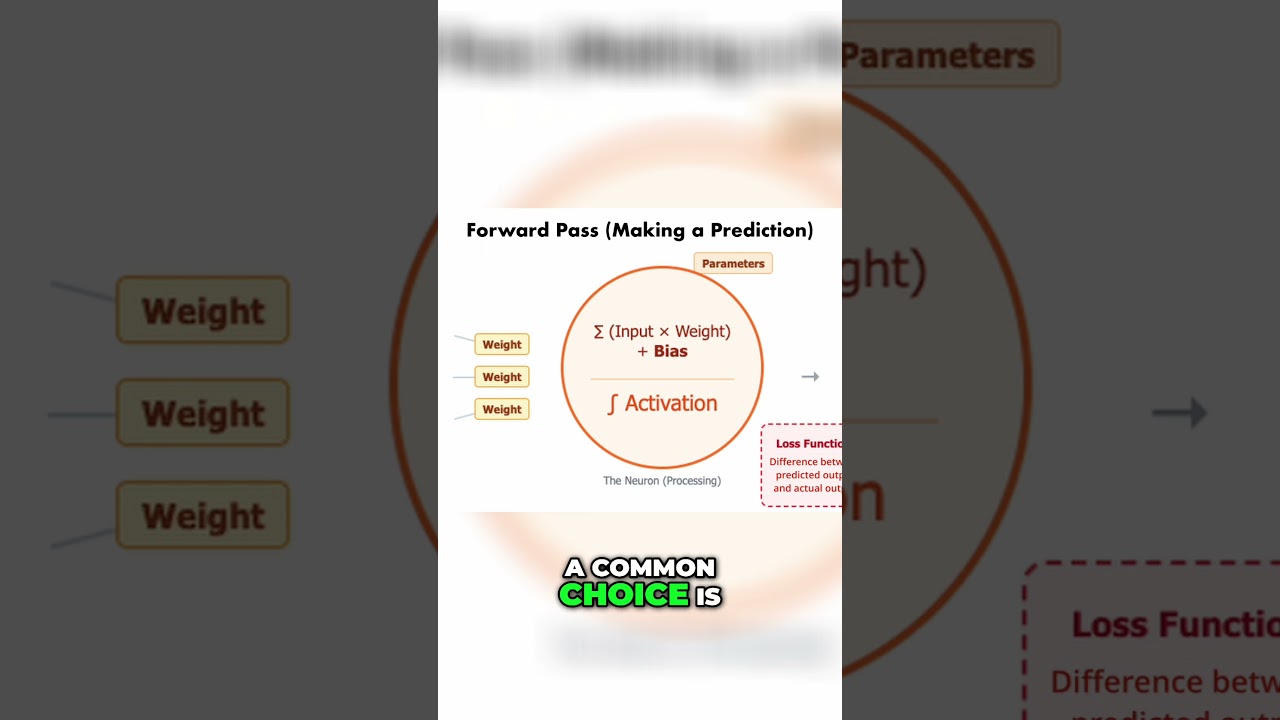
In the world of AI, a Loss Function is that scoreboard for errors. It measures the difference between what the computer guessed and what the real answer was.
- High Loss: The computer is way off. It made a big mistake.
- Low Loss: The computer is very close to the truth.
How It Works: Mean Squared Error
One of the most popular ways to measure these mistakes is called Mean Squared Error (MSE). It sounds fancy, but it’s actually pretty simple:
- Take the difference between the AI's guess and the right answer.
- Square that number (multiply it by itself) so that even small mistakes become easier to see.
- Add them all up to get a total "mistake score."
Why Minimizing Loss Is Key
The goal of training an AI is to make the loss score as close to zero as possible. When the loss is small, it means the computer’s predictions are almost perfect.
Think of it like a game of "Hot or Cold." The AI makes a guess, the loss function tells it how "cold" (wrong) it is, and the AI tweaks its math to get "hotter" (closer to the right answer) next time.
The Big Picture
AI isn't magic; it’s just lots and lots of math. By constantly checking its own scoreboard, the AI learns to stop making the same mistakes. The lower the loss, the smarter the AI!
Keep exploring, and remember: even computers have to fail a few times before they get it right.