Anthropic just cut Claude Fable 5's biology fallbacks by about 85%. If Fable ever gave you a weaker answer to a harmless biology or health question, this is the reason, and it is now mostly fixed.
What a fallback actually is
Fable 5 does not answer every biology question itself. A safety classifier sits in front of it. Anthropic describes these classifiers as smaller, automated AI systems that detect when Fable 5 is asked to perform a safeguarded biology task. Think of it as a spam filter for dangerous biology.
When the classifier fires, your request is rerouted to Opus 5. Opus 5 is still a capable model, but it does not have the same level of biological capability as Fable 5. Anthropic calls that reroute a fallback. The problem was false positives: the filter fired on innocent questions all the time, so people asking about a blood test got the smaller model without knowing why.
How Anthropic fixed it
The classifier follows a constitution, a written rule set that tells it what counts as safeguarded and what is allowed. Anthropic rewrote that constitution with detailed carve-outs for benign uses, collected feedback from a range of outside experts, generated new training data from the revised rules, and retrained the classifier. Then they checked that it still blocks the harmful dual-use material.
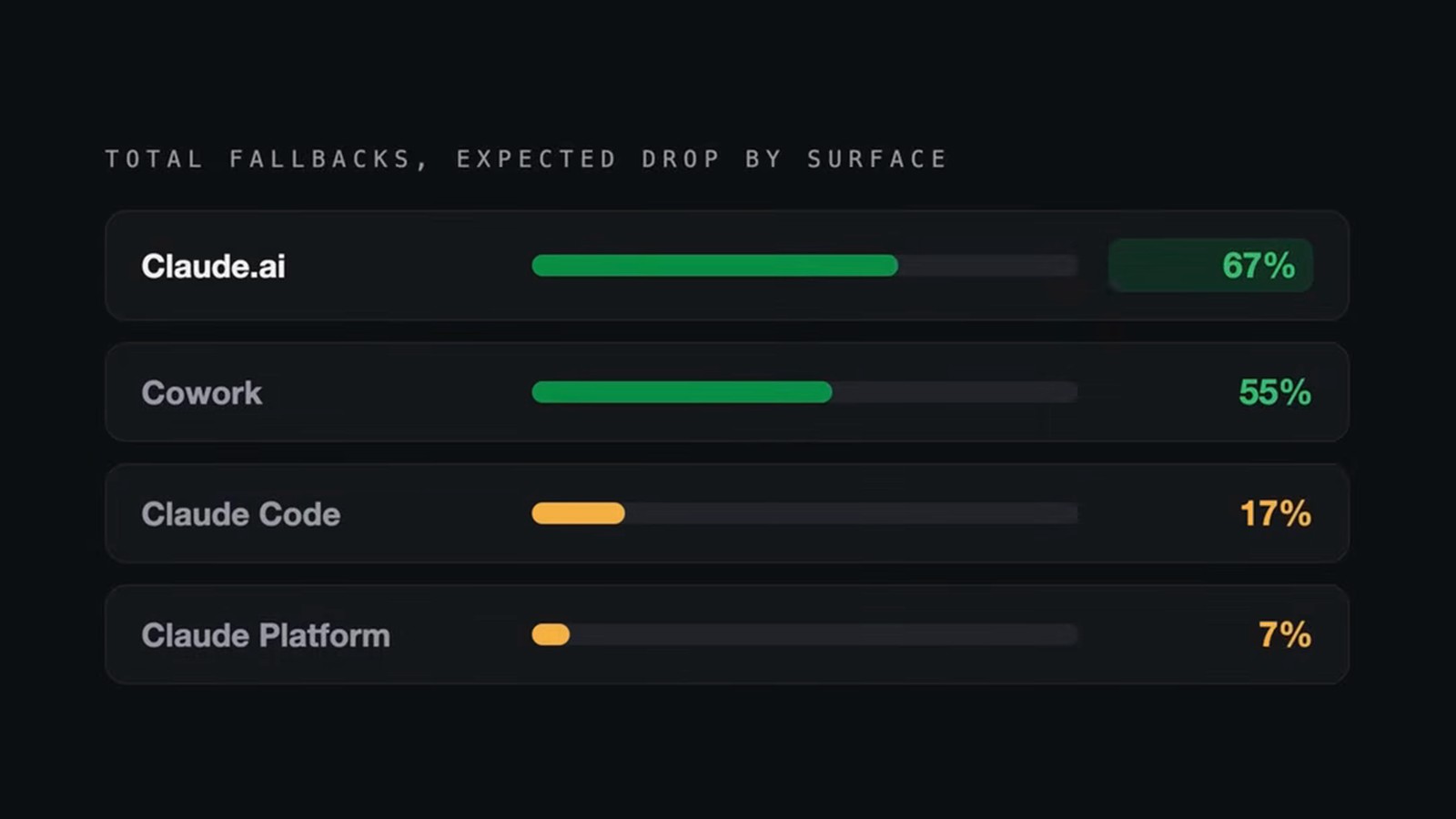
The result in their testing: biology fallbacks dropped by about 85% across product surfaces. Per product, Anthropic expects total fallbacks to drop by about:
- 67% on Claude.ai
- 55% in Cowork
- 17% in Claude Code
- 7% on the Claude Platform
In practice, interpreting lab results, understanding symptoms, and learning biology in an educational context should now just work. Healthcare professionals also get more support from Fable 5 on clinical tasks.
Why this was hard in the first place
Good biology and bad biology often look identical to a filter. Anthropic's own example is captopril, a real blood pressure drug. Scientists developed it by isolating toxic components of snake venom, the same compounds that crash blood pressure in humans. Same molecules, opposite intent. As Anthropic puts it, researching a treatment for a disease sometimes requires producing the dangerous compounds that cause that disease in the first place.
That is why the fix has limits. Requests in virology, toxicology, and molecular design still fall back to Opus 5, because Anthropic treats them as dual-use. Anthropic says plainly that Fable 5 is not yet usable for professional biology research or drug development, that some false positives will remain, and that it is working on trusted access paths for researchers.
So if you use Claude for health questions, coursework, or clinical reference, expect far fewer silent downgrades. If you work in drug discovery, the wall is still there.
Read the full announcement: Improving Fable 5's biology safeguards (Anthropic)