OpenAI just released GPT Realtime 2.1, and it is a real step forward for voice agents. The core idea: instead of turning your audio into text, reasoning about the text, then converting a reply back into audio, it processes speech directly. One model handles the listening, the reasoning, and the tool calling.
Why Speech-to-Speech Matters
The old pipeline had a lot of moving parts. Audio in, transcribe to text, run the model, generate text, convert text to speech, audio out. Every hop added lag and a chance to lose information like tone and timing.
GPT Realtime 2.1 collapses that into a single model that works on speech directly. The result is less lag and a much smoother conversation. It feels more like talking to something that is actually listening, not a relay passing messages between three systems.
It Fixes What Actually Breaks Voice Agents
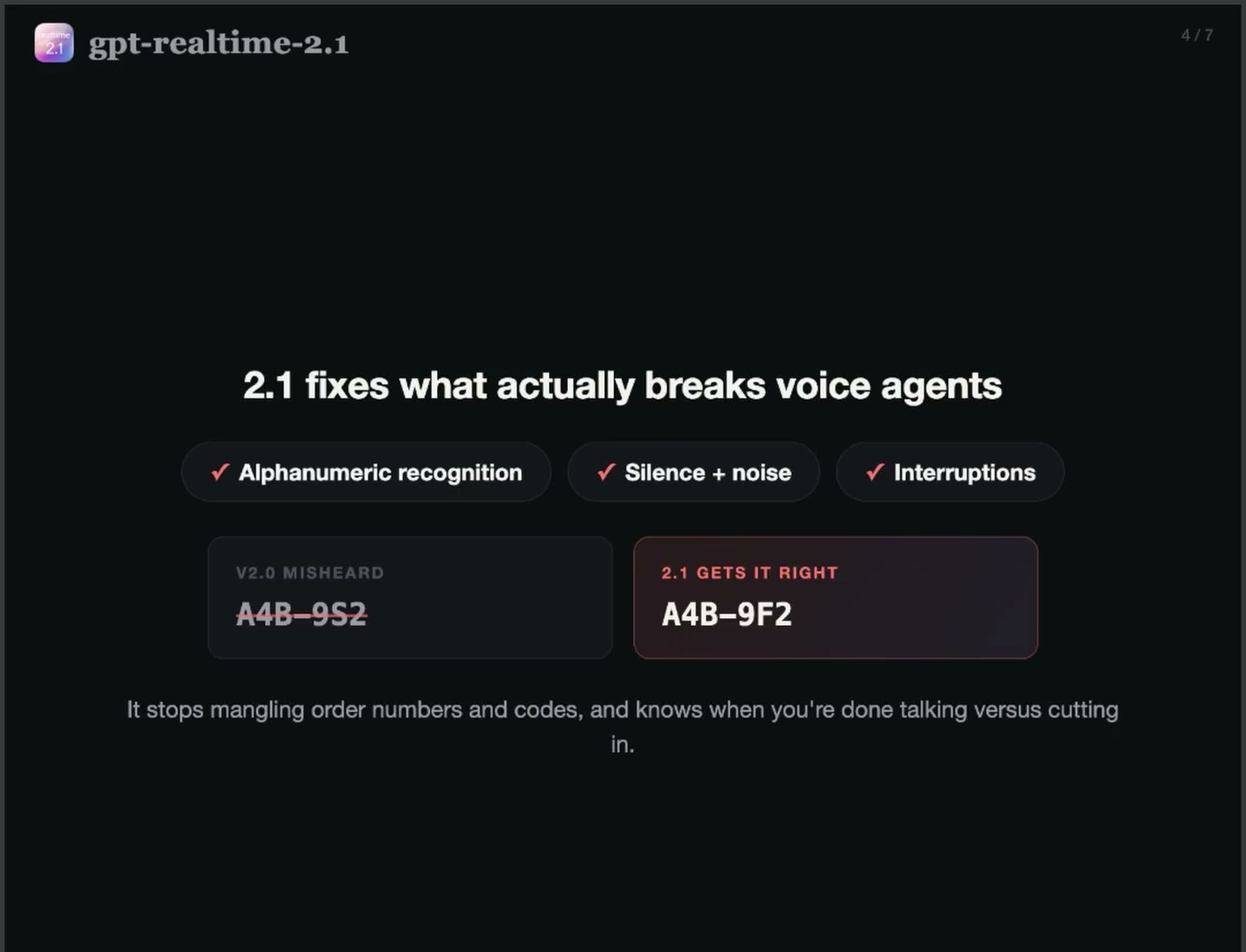
The upgrades target the exact things that make voice bots frustrating in the real world:
- Alphanumeric recognition. It stops mangling order numbers and confirmation codes. In OpenAI's own example, version 2.0 misheard a code as "A4B-9S2" while 2.1 gets it right as "A4B-9F2." If you have ever read a code to a voice system three times, you know why this matters.
- Silence and background noise. Fewer mistakes when there is noise, and better detection of when you have actually stopped talking versus just paused.
- Interruptions. Smarter handling when you cut in, so it reacts naturally instead of talking over you or freezing.
Tune the Cost to the Task
One practical feature: you can configure how much reasoning the model uses. Turn it down for simple tasks to save money and keep responses fast, and turn it up for complex ones that need more thinking. You are not paying for maximum reasoning on a request that just needs a quick answer.
It also keeps full multi-modal support, so it handles text, audio, and images, not voice alone.
The Takeaway
Voice agents have been held back by lag and by dumb failures on the basics, like getting a confirmation code wrong. GPT Realtime 2.1 goes straight at both. Direct speech-to-speech processing plus real fixes for numbers, noise, and interruptions is what pushes voice from a demo into something you would actually deploy on a support line.