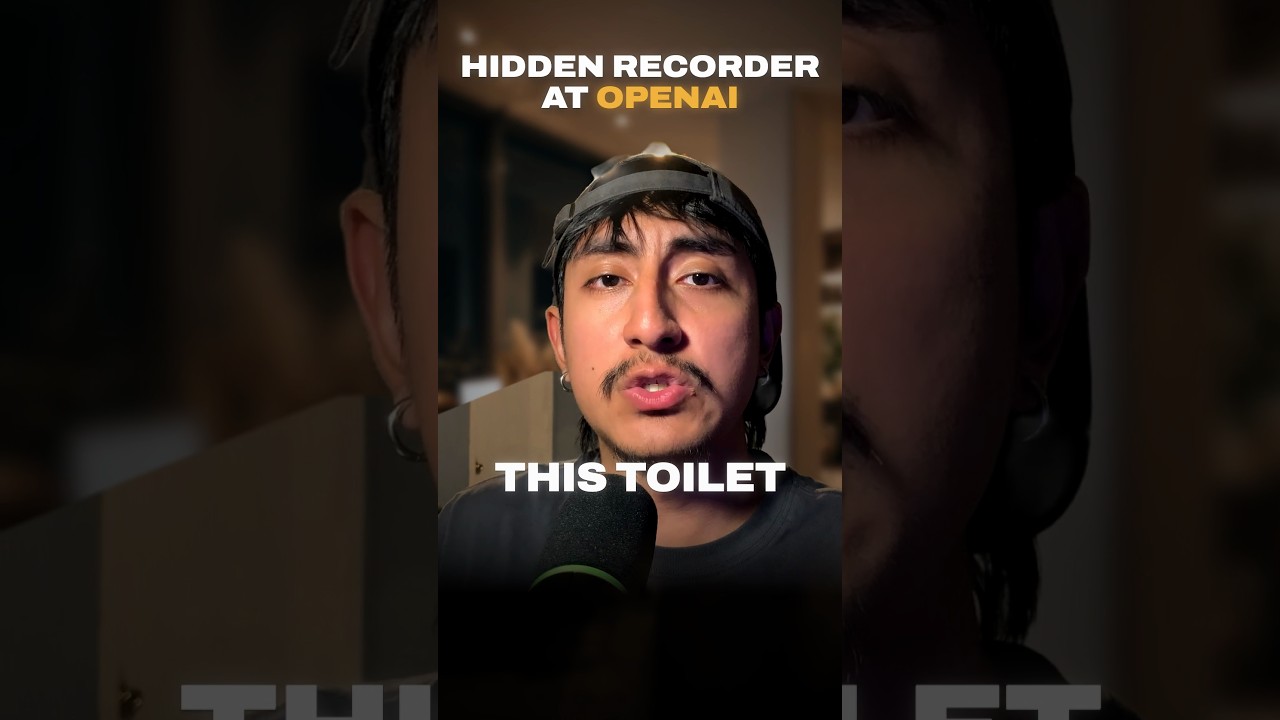
A recording device hidden in toilet paper was found plugged in behind a TV in OpenAI's executive conference room, and its contents were encrypted. That is from a U.S. Department of Justice press release dated October 13, 2026, which describes a criminal complaint unsealed that day.
Before the details: everything below is an allegation from the complaint, as the DOJ describes it. The person named has been charged, not convicted, and is presumed innocent unless proven guilty in court.
The charge
According to the DOJ, Abdulrahman Alfozan, 35, an engineer at OpenAI since July 2025, was arrested on October 9 and charged with "using or endeavoring to use an electronic, mechanical, or other device to intercept oral communications." He made his initial appearance in federal court on October 13. If convicted, he faces a maximum of 5 years in prison and a $250,000 fine, followed by 3 years of supervised release.
The complaint lays out five pieces of evidence. Here they are in order.
1. The device
On or about September 30, OpenAI personnel found a recording device inserted into a USB port on the back of a television in an executive conference room in one of its San Francisco buildings. OpenAI determined that the device had been concealed in toilet paper, was installed on or about September 28, and that its contents were encrypted.
2. The cameras
The complaint says CCTV footage inside OpenAI's office showed him near that conference room on multiple dates before the device was found, "although he had no authority to access or to participate in meetings" held there.
3. The lookups
Before September 28, the complaint alleges, he used a productivity tool to make multiple inquiries about OpenAI's building addresses, meeting rooms, meeting room capacities and calendars, "leadership and exec" locations, and external partner meetings.
4. The chatbot prompts
This is the AI part of the story. According to the complaint, a chatbot account associated with his spouse (which "shared multiple identifiers and attributes" with his own chatbot account) submitted prompts between September 24 and September 30 about building, customizing, testing and remote accessing a device. The quoted examples include "build[ing] a continuous audio recorder," "customiz[ing] Wi-Fi . . . connectivity" and "encrypt[ing] the SD card." The same account allegedly asked about the first device's custom header and unique MAC address between September 27 and September 28.
The press release does not say which chatbot it was, so I will not guess.
5. The second device
The complaint alleges that on October 5 he entered the executive conference room and appeared to look behind the television where the device had been. Also on or about October 5, he allegedly left a bag unattended in a different room. OpenAI security found and opened it and, according to the complaint, discovered his wallet and ID and another recording device similar to the first.
Why this matters beyond one case
Two things stand out to me. First, the DOJ frames this as a national security case: the release quotes the Director of National Intelligence and the FBI Director, and ties the prosecution to a presidential memorandum on super intelligence technology. AI labs are now treated as targets in the same way chip makers and defense contractors are.
Second, the chatbot prompts. If the allegations hold, the investigation leaned on what was typed into a chatbot. Whatever you type into an AI assistant at work is a record. That is worth remembering for anyone, guilty or not.
What we do not know
- Nothing in the release says what, if anything, the device recorded, since its contents were encrypted.
- The release does not name the chatbot provider.
- The defense has not given its side in the release. A complaint is the start of a case, not the end of one.
Watch the short above for the five clues in under a minute. For another case where national security shaped what OpenAI did, see my post on GPT 5.6 being held back. And if you want my Claude Code skills and AI workflows, they live in my AI Academy community on Skool.
Source: U.S. Department of Justice press release 26-1173 (released October 13, 2026, updated October 19, 2026). Case: U.S. v. Abdulrahman Alfozan, 3:26-mj-71329.