OpenAI just announced its own custom AI chip, and it is not a GPU. It is called Jalapeño, and it was built from the ground up to do one thing: run large language models faster and cheaper than the hardware everyone uses today.
Why It Is Not a GPU
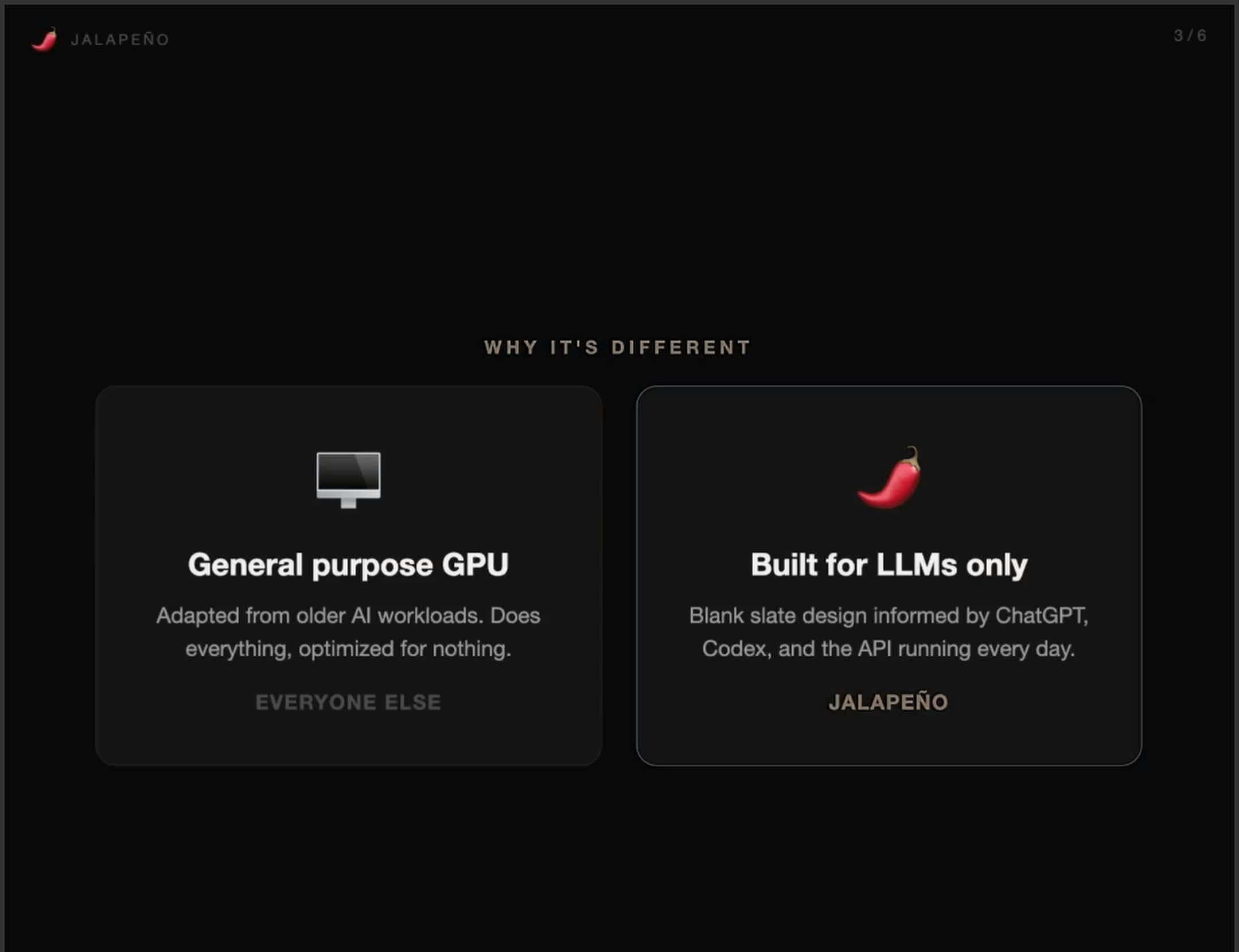
Almost every AI system today runs on GPUs. The problem is that GPUs were never designed for this. They were adapted from older workloads. They do everything, which means they are optimized for nothing in particular.
Jalapeño is the opposite. It is a blank-slate design informed by ChatGPT, Codex, and the API running every single day. Instead of a general-purpose chip that happens to run AI, it is a chip built for LLM inference and nothing else. That focus is where the efficiency comes from.
AI Designed the Chip
Here is the part that stops you. OpenAI used its own AI models to help design Jalapeño, and they did it in about nine months. Chip design normally takes years. AI accelerating the design of the hardware that will run the next generation of AI is a genuine loop closing in on itself.
One of the key wins from that design process is moving data physically closer to the processor. That cuts the energy spent shuffling information around, which is one of the biggest hidden costs in running these models. Less data movement means lower power draw and higher performance.
What It Means
Jalapeño is scheduled to roll out in data centers starting in 2026. If it delivers on the efficiency claims, it changes the economics of running AI at scale. Cheaper inference means cheaper products, and it loosens OpenAI's dependence on outside chip suppliers.
The bigger story is the pattern. Purpose-built AI chips are replacing general-purpose GPUs, and AI is now helping design the very hardware it runs on. That is the direction the whole industry is heading, and Jalapeño is one of the clearest signals yet.