For the first time, an AI supported a neurosurgeon in real time during a live operation, and it helped save a man's sight. The surgery took place at the National Hospital for Neurology and Neurosurgery, part of University College London Hospitals (UCLH), as part of a clinical trial.
The patient and the risk
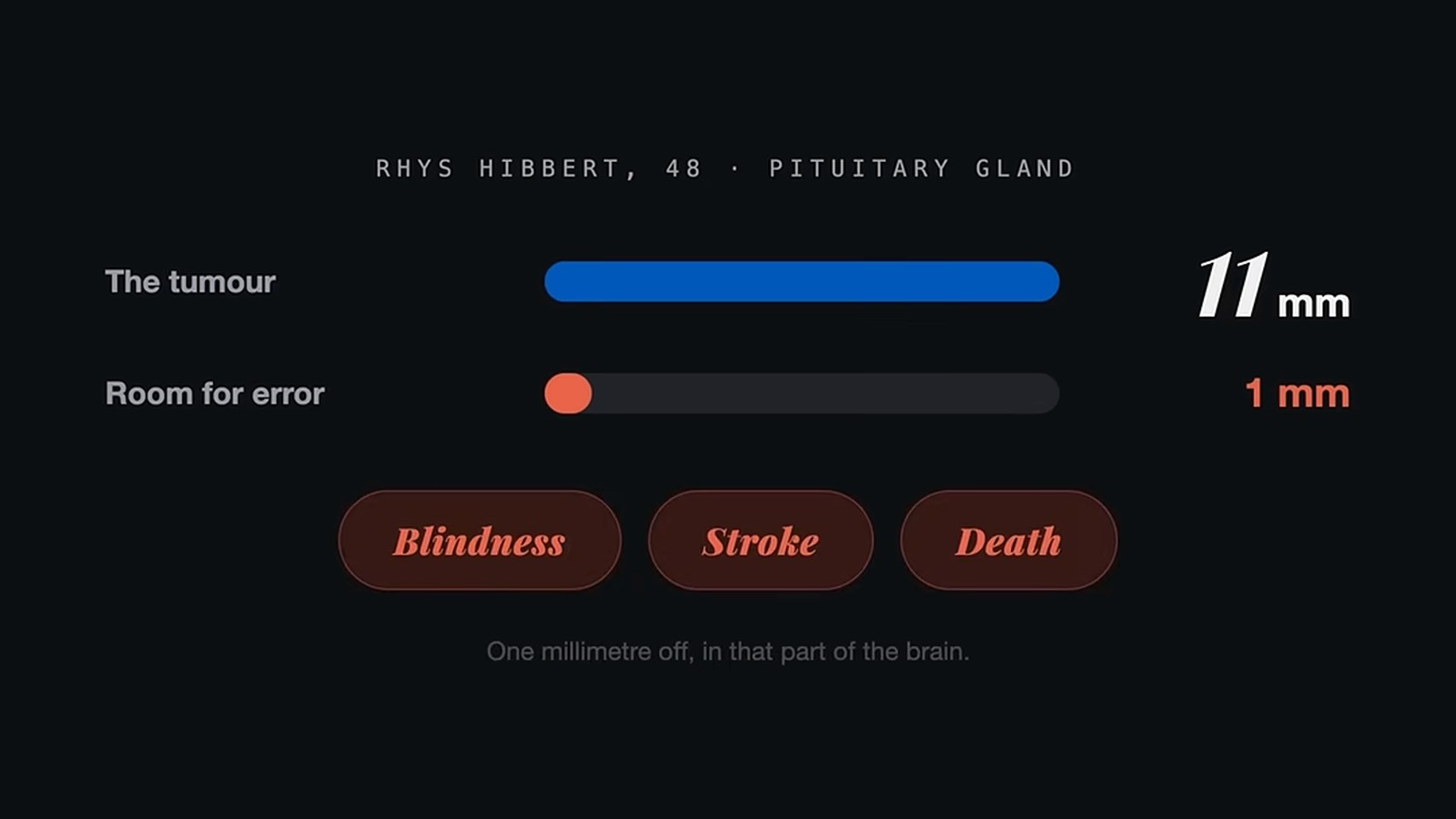
The patient is Rhys Hibbert, 48, from Bedfordshire. He had a tumour of about 11 millimetres on his pituitary gland. It was found by chance in December 2024, after he collapsed and had a seizure on a walk. Over time it caused severe hormone problems and took away his lower and peripheral vision, so he started using walking sticks after he kept tripping.
The pituitary gland is about the size of a marble, and it sits packed tight against blood vessels and the nerves that control vision. In that part of the brain, going one millimetre wrong can lead to blindness, stroke or death.
What the AI actually did
Surgeons normally work from scans taken before the operation. Here, the AI analysed the live surgical video feed as the operation happened and highlighted the critical structures at the base of the brain, so the team could see which areas to avoid while removing as much tumour as safely possible.
The system was built at the UCL Hawkes Institute. It was trained and evaluated on a large collection of annotated videos from earlier endoscopic pituitary operations. Dr Sophia Bano, the technical lead, says it learned from hundreds of surgical videos. It runs on NVIDIA's Clara IGX, a platform designed for real-time AI in medical devices. Professor Hani Marcus performed the operation with Mr Danyal Khan, the neurosurgical resident leading the work.
The result
When Rhys woke up, he said he "could see everything in the room clearly." Within a week, he was walking on his own without glasses or sticks. He described a "360 degree panoramic view" of everything around him, something he had not had for more than a year.
The honest limit
This is one patient in an ongoing trial. The study is still asking whether real-time AI help is useful and safe, and it will report feasibility, safety and clinical outcomes later. Other groups around the world are also testing AI during neurosurgery, for example to highlight tumour tissue on ultrasound scans. So treat this as a strong first result, not proof that AI belongs in every operating room yet.
What makes it notable is the shift from static scans to a model that reads the surgery live. That is the same computer vision you see in everyday AI tools, now running where a millimetre matters.
Read the full story from UCL News.