Hi, I'm Robby!
I spend my days building AI systems, and I love breaking down complex math into bite-sized pieces. Today, we are looking at something called the Sigmoid Function. It sounds fancy, but I promise it’s actually quite simple!
What is the Sigmoid Function?
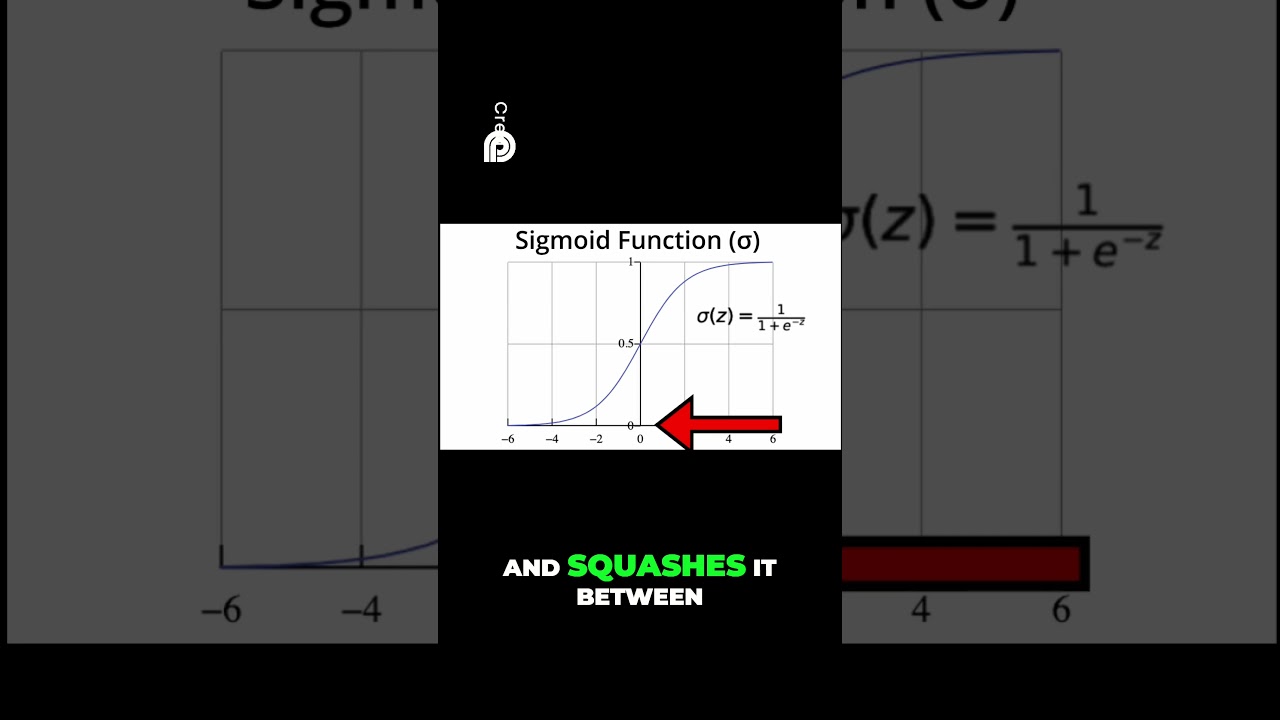
Think of the sigmoid function like a funnel for numbers. No matter what number you put into it—whether it’s a tiny negative number like -100 or a huge positive number like 1,000—the sigmoid function "squashes" it.
After it goes through the funnel, the result will always be a number between 0 and 1.
How it Works
It’s all about direction:
- Positive inputs: The bigger the number, the closer the result gets to 1.
- Negative inputs: The smaller the number, the closer the result gets to 0.
- Zero: If you put in 0, the output lands right in the middle at 0.5.
Why Do We Use It?
In the world of AI, we love the sigmoid function because it acts like a probability calculator.
Imagine you are building an AI that looks at a photo and decides if it’s a cat or not. The computer gives you a score, but that score could be anything. By using the sigmoid function, you turn that score into a percentage. If the output is 0.9, you can be 90% sure it’s a cat!
It’s a simple tool, but it is the secret sauce behind many of the AI models we use every single day.