How Does AI Actually Learn?
Hi! I’m Robby. As a software engineer who builds AI systems every day, I get asked a lot about how computers "learn." It sounds like magic, but it’s actually just a lot of math happening very fast.
Think of a machine learning model like a student trying to hit a bullseye in the dark. The model makes a guess, sees how far off it is, and then adjusts its aim. This process of adjusting is how models get smarter.
The Secret to Training: The Learning Rate
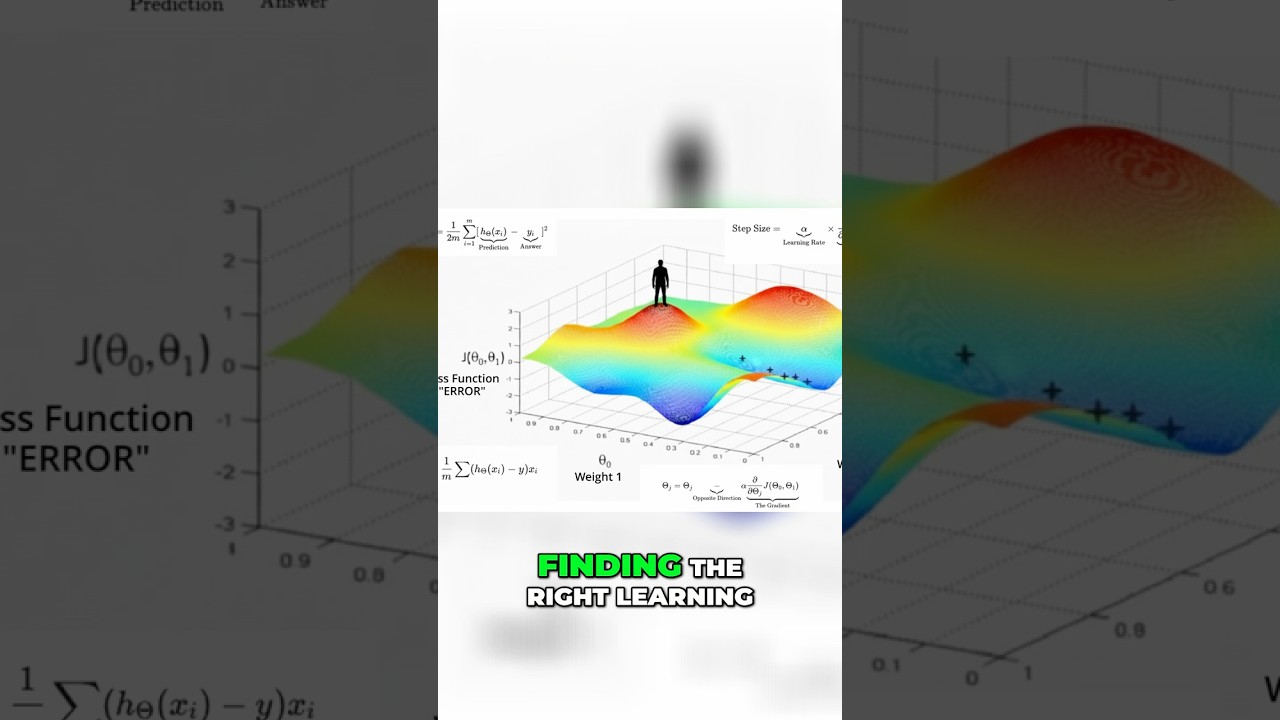
To help the model learn, we use something called a learning rate. You can think of the learning rate as the size of the step the model takes after it makes a mistake.
When the model sees its error, it calculates a "gradient." The gradient is like a compass—it points in the direction that will fix the error. The learning rate then decides how far to walk in that direction.
Finding the "Goldilocks" Zone
Choosing the right learning rate is the most important part of training a model. Here is what happens when you get it wrong:
- Too High: If the learning rate is too big, the model takes giant leaps. It will zoom right past the correct answer and keep bouncing around, never actually settling down.
- Too Low: If the learning rate is too small, the model takes tiny, baby steps. It will take forever to finish, and it might even get stuck in a rut before it reaches the finish line.
- Just Right: When you find the perfect balance, the model moves smoothly and quickly toward the best answer.
Why This Matters
In my work building AI, I spend a lot of time testing different learning rates. It’s a bit like tuning a radio—you have to move the dial until the sound is perfectly clear.
If your AI model isn't performing well, don't just blame the data! Check your learning rate first. Finding that "just right" setting is often the difference between a model that works and one that just guesses.