Hi, I'm Robby!
I’m a software engineer who builds AI systems every day. Sometimes, the math behind artificial intelligence sounds super complicated. But the truth? A lot of it is just simple logic. Today, let’s talk about something called the Sigmoid Function.
Think of it as a bouncer at a fancy club.
The Club Bouncer Analogy
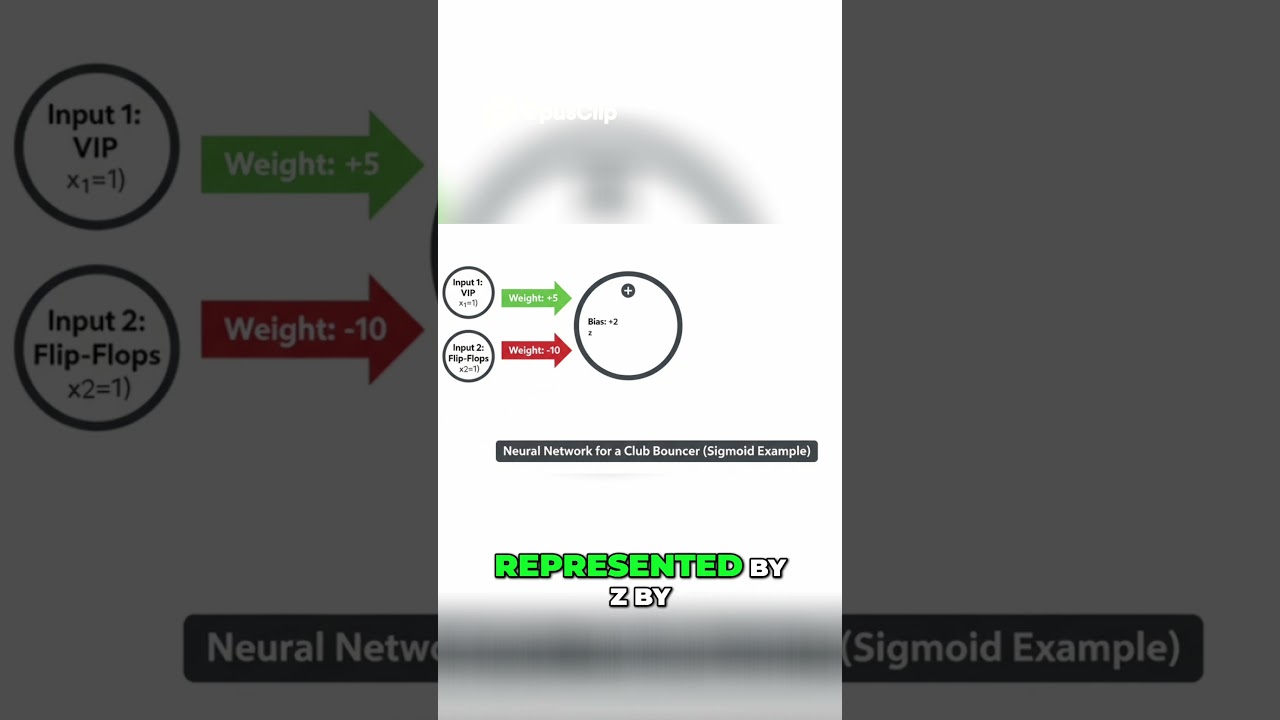
Imagine you are trying to get into a club. The AI "bouncer" needs to decide if you can come in. It looks at two main things:
- VIP Status: Are you on the list? (This is a big positive!)
- Flip-Flops: Are you wearing beach shoes? (This is a big negative!)
Each of these items has a "weight." Your VIP status gives you points, but those flip-flops take points away.
Doing the Math
First, the bouncer adds up all your points. Let’s say you are a VIP, but you are wearing flip-flops. The math gives you a raw score.
This score could be a huge number, like 50, or a tiny number, like -10. But the club bouncer doesn't want raw numbers. He wants a probability—a simple number between 0 and 1.
Why We Use Sigmoid
This is where the Sigmoid Function comes in. It’s like a magical squashing machine:
- If your score is super high, it squashes it down to almost 1 (100% chance you get in).
- If your score is super low, it squashes it down to almost 0 (0% chance you get in).
In our example, even though you were a VIP, the flip-flops hurt your score. After the sigmoid function "squashed" the math, your final result was about 4.7%.
Sadly, you aren't getting into the club tonight!
The Takeaway
The sigmoid function is just a clever tool we use in neural networks to turn messy data into a clean percentage between 0 and 1. It helps the computer make a final "Yes" or "No" decision based on the information it has.
Keep building, keep learning, and don't wear flip-flops to the club!