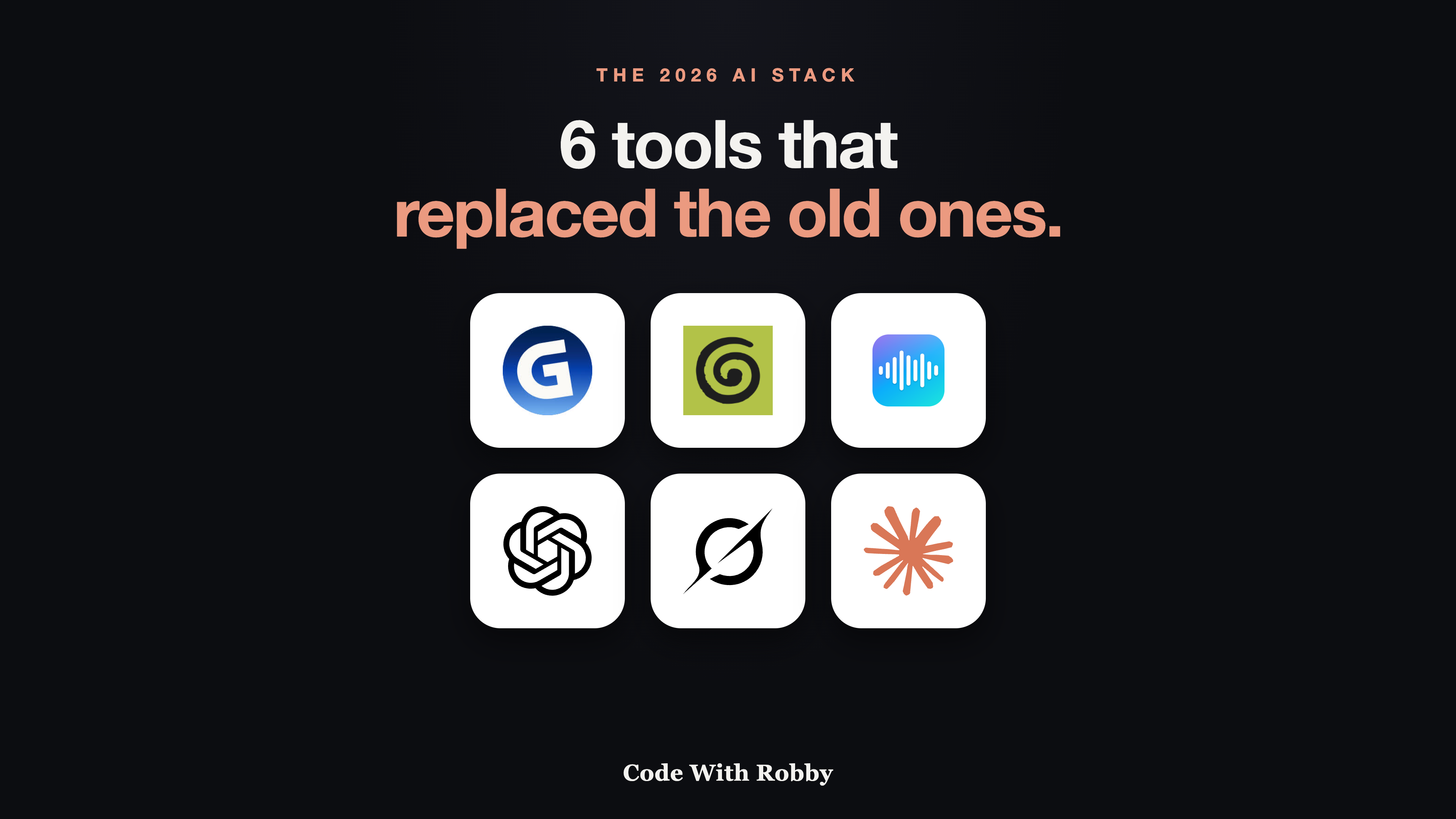
The 2026 AI stack looks nothing like the 2025 one. I keep a running list of what I actually reach for day to day, and every few months the lineup quietly turns over. Here is where it stands right now: six tools that replaced the old guard, and why each swap stuck.
Gamma replaced PowerPoint
Slides, sites, and carousels from a single prompt. I stopped opening PowerPoint months ago. Give Gamma a topic and an outline and it produces something presentable on the first pass, which means the time I used to spend fighting with slide layouts now goes into the actual content.
Granola replaced Fireflies
Clean meeting notes with no bot joining your call. That last part matters more than it sounds. Nobody wants a visible recording widget sitting in the participant list. Granola listens locally and produces notes that read like a person wrote them, not a transcript dump.
OpenFlow replaced Wispr Flow
This one is mine. OpenFlow is my own open source dictation app for macOS. Hold a key, talk, and it types wherever your cursor is. It runs 100% on device: no cloud, no subscription, and your audio never leaves your Mac.
I built it because Wispr Flow is genuinely good but locks the best features behind a subscription, and I wanted something I could point at my own hardware without a monthly fee. It uses Parakeet or Whisper locally depending on the language, so it works fully offline once the models are downloaded.
Grab OpenFlow for free. It is free and open source, no catch. And if you are not sure the switch is worth it, my typing vs speaking speed test shows you exactly how much faster your voice is than your fingers.
ChatGPT Images replaced Nano Banana
Run it with Thinking on. The difference between ChatGPT's image generation with reasoning enabled and without is bigger than most people realize. It plans the composition before it renders, which is exactly the gap that made Nano Banana feel like a step behind for anything text-heavy or spatially precise.
Grok replaced Perplexity
Live access to X plus multi-agent research. For anything time-sensitive, being able to pull directly from real-time X activity beats a search index that is even a few hours stale. Grok's multi-agent research mode also does a better job of cross-checking sources than a single-pass search.
Claude replaced DeepSeek
Better writing, better reasoning, and it does not sound like a robot. DeepSeek is impressive for the price, but the writing quality gap shows up fast once you are shipping anything client-facing. Claude is what I reach for when the output actually needs to sound like a person wrote it.
Old tools made you do the work
That is the pattern across all six. The old guard required you to operate them: format the slides yourself, take your own notes, subscribe to unlock the good dictation model, plan your own image composition, trust a stale search index, edit robotic prose into something readable. The 2026 replacements just do the work.
Which one is actually in your stack? The dictation one is free if you want to try it yourself, and if you want help building AI tools like this into your own workflow, I teach it 1-on-1 inside my free community.